Everything You Need to Rank Higher on Google 100% Free
Search engine optimization does not have to cost money. That is the simple truth. Thousands of bloggers, freelancers, small business owners, and digital marketers are already growing their Google rankings without spending a single rupee. Tool.theTopFile gives you access to powerful free SEO tools that cover every part of your SEO strategy all in one place, with no account, no login, and no hidden fees.
Most people think good SEO requires expensive software like Ahrefs or Semrush. That is not true anymore. Today, the right free SEO tools can help you do keyword research, run a full website audit, check your backlinks, generate meta tags, analyze page speed, and fix on-page errors all without paying a monthly subscription. Whether you are just starting your blog or managing a business website, you do not need to spend money to get real results.
Every tool on Tool.theTopFile works instantly. Just open the tool, enter your URL or keyword, and get your data in seconds. There is no sign-up form. There is no credit card required. No dashboard to learn. No waiting. You get clean, actionable SEO data the moment you need it.
Here is what you can do with these tools. You can find low-competition keywords your audience is already searching for. You can check your website for broken links, slow pages, and crawl errors before they hurt your rankings. You can analyze your backlink profile and discover which websites are linking to you. You can generate the perfect meta title and meta description for every page. You can preview exactly how your page looks in Google search results before you publish it.
These are not basic utilities. These are the same tasks that SEO professionals do every day now available to everyone, completely free. Small teams and solo creators can now build a full SEO workflow without a paid subscription. Keyword discovery, technical audits, backlink monitoring, content optimization, rank tracking it is all here.
Explore Our Free SEO Tools by Category
On-page SEO is the foundation of every high-ranking website. It is the part of SEO that you control directly. You control the words on the page. You control the titles. You control the structure. And when you get these elements right, Google understands your content better and ranks it higher. Our free on-page SEO tools help you fix every element that Google evaluates when deciding where to place your page in search results.
Start with your title tag: This is the most important HTML element on your page. Your title tag should be 50 to 60 characters long, with your primary keyword placed near the beginning. A strong title tells Google what your page is about. It also tells the user why they should click. Both things matter.
Next, fix your meta description: Many people ignore this. That is a mistake. A well-written meta description increases your click-through rate, and a higher CTR sends a positive relevance signal to Google. Our free tool shows you exactly how your page title and meta description will look in Google search results before you publish so you can fix problems before they cost you clicks.
Then check your heading structure: Header structure from H1 through H3 communicates your page’s topic hierarchy directly to Google’s crawlers. Every page must have one H1 tag. Your H2 and H3 headings should cover the main topics and subtopics clearly. When your headings are clean and logical, Google can understand your content at a glance and so can your readers.
Image alt text is often forgotten: But it should not be. Alt text, captions, and descriptive filenames support both accessibility and semantic understanding. When you add proper alt text to every image, Google can read your visuals and that helps your page rank in both web search and image search.
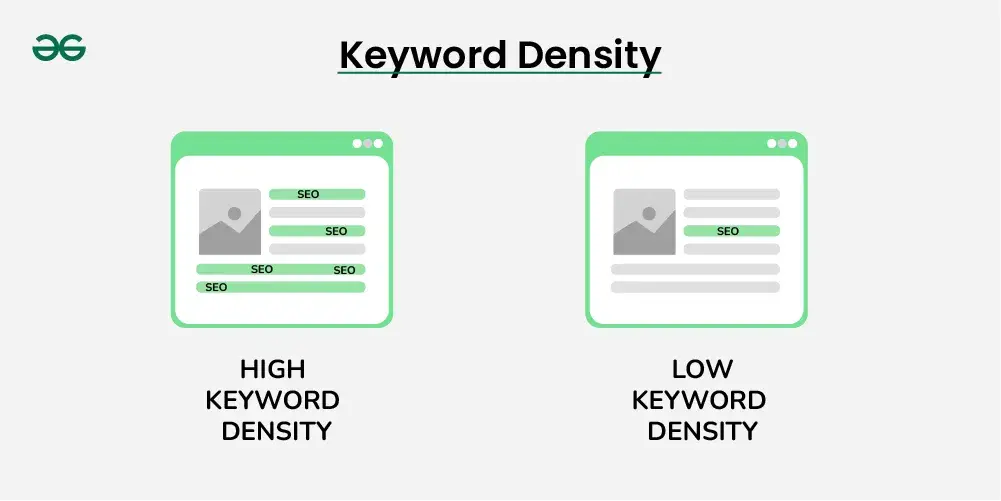
Keyword density matters: You do not need to stuff keywords. You need to use them naturally. Instead of repeating the same keyword ten times, use related phrases throughout the content. This helps with semantic search, which is how Google understands the full meaning of your content, not just individual keywords. Our keyword density checker shows you exactly how many times a keyword appears on your page and whether you need to adjust it.
Finally, never skip internal linking: Internal linking distributes PageRank deliberately, helping Google discover your most important pages faster. Add 5 to 10 internal links per 2,000 words using descriptive, keyword-rich anchor text. This keeps users on your site longer and helps Google crawl your full content library.
Tools in this category:
- SEO Title Generator
- Free SEO Checker
- Keyword Density Checker
- Heading Tag Analyzer
- robots.txt Generator
- XML Sitemap Generator
- SEO Slug Generator
- Image Alt Text Generator
- Content Optimizer Tool
- Article Rewriter
Keyword Research Tools
Finding the right keywords is the first step to successful SEO. But most people do keyword research the wrong way. They chase big, broad keywords with millions of searches. Then they wonder why their pages never rank. The truth is simple. You need the right keywords not just popular ones.
Our free keyword research tools help you find exactly what your target audience is typing into Google. Not guesses. Real search data. And that makes all the difference.
Here is what most people get wrong: They target short, highly competitive keywords like “SEO tools” or “digital marketing.” These keywords are dominated by billion-dollar websites with thousands of backlinks. A new or small website cannot win there. The real opportunity in 2026 is in long-tail keywords specific, intent-rich phrases that your competitors are ignoring.
Long-tail keywords are the smarter strategy: Research shows that 91.8% of all searches are long-tail, and they convert at 2.5 times the rate of short-tail terms. Think about it. Someone searching “free keyword research tool for small business in Pakistan” is far more likely to take action than someone searching just “keyword tool.” Specific searches come from people who know what they want.
Our free keyword research tool does the hard work for you: Enter any topic or seed keyword. The tool shows you related search terms, question-based queries, and long-tail variations all with real search intent data. You instantly see which keywords are worth targeting and which ones to skip. No subscription needed. No credit card required.
Search intent is everything in 2026: Old-school keyword research focused on volume is outdated. In 2026, search intent and topic relevance are the primary drivers of SEO success. Our tools help you understand why someone is searching, not just what they are searching. This means your content matches what Google wants to rank and what users actually want to read.
Build topic clusters, not random pages: Cluster semantically related long-tail keywords into a single page. One comprehensive page covering a cluster outranks five thin individual pages every time. Our related keywords finder helps you group keywords by topic so you can build content that covers a subject completely. This is how you build topical authority the signal Google uses to decide if your site deserves to rank consistently.
In 2026, Google AI Overviews often answer broad short-tail searches directly on the results page leaving little organic traffic for websites. But when users search for long-tail keywords with specific details or intent, AI often cannot provide a complete answer. That is where optimized pages still win clicks.
Our free keyword research tools also include a keyword position checker, a local keyword finder, and a Google SERP analyzer. Together, these tools give you a complete picture of where you stand and where you can grow. You can see which keywords you are already ranking for, which ones are within reach, and which local search terms your nearby customers are using right now.
Good keyword research is not a one-time task. It is the foundation of your entire content strategy. Get it right, and every page you publish has a clear purpose and a real chance to rank. Get it wrong, and you create content that no one ever finds. Start with our free keyword research tool today. No account. No waiting. Just enter your topic and discover the keywords that will drive consistent organic traffic to your website.
Tools in this category:
- Free Keyword Research Tool
- Long-Tail Keyword Generator
- Keyword Position Checker
- Local Keyword Finder
- Google SERP Analyzer
- Related Keywords Finder
- Grammar Checker
Backlink Analysis Tools
Backlinks remain one of Google’s top three ranking signals in 2026. That has not changed. What has changed is this quality now beats quantity every single time. One strong backlink from a trusted, relevant website does more for your rankings than 200 links from low-quality sources. And bad backlinks? They can actively destroy the rankings you worked months to build.
What is a backlink and why does it matter? When another website links to your page, Google sees it as a vote of confidence. It says: “this content is worth referencing.” When a reputable website links to your content, Google interprets it as a vote of confidence a signal that your page contains information worth referencing. The more votes you earn from trusted sites, the more authority your website builds. And more authority means higher rankings.
Backlinks now account for approximately 13% of Google’s ranking algorithm and remain a top-3 ranking signal. 89% of top rankers have at least one link from a DR 60+ domain, compared to just 34% of pages at position 20 and beyond. That gap is not a coincidence. Strong backlinks separate the pages that rank from the pages that get ignored.
But not all backlinks help you: Some actually hurt you. A proper backlink audit can identify toxic links dragging down your rankings including links from penalized domains, link farms, irrelevant foreign sites, and over-optimized anchor text patterns. These toxic backlinks send negative signals to Google. They lower your domain trust. They can even trigger a Google penalty that wipes out your organic traffic overnight.
Free backlink checker shows you every website that links to your domain. You can see the number of referring domains, the quality of each link, and which links could be hurting you. No paid subscription needed.
Toxic backlink checker goes one step further. It scans your entire link profile and flags dangerous links before they cause damage. Active management of backlinks, including the removal of toxic links, can positively impact a site’s recovery and future ranking potential. Catching these links early before Google acts is the difference between protecting your rankings and losing them.
Finding new link-building opportunities is equally important. Guest posting, broken link building, and tiered link building are the three highest-ROI link building strategies in 2026.
Competitor backlink checker helps you see exactly who is linking to your competitors. If a website links to them, there is a good chance they will link to you too. This turns competitor research into a ready-made link-building list.
Domain authority checker tells you how strong your website is compared to others in your niche. Our anchor text analyzer shows you how linking websites describe your pages. And our link analyzer gives you a full breakdown of every link pointing to your site so you always know where you stand.
Tools in this category:
- Free Backlink Checker
- Domain Authority Checker
- Link Analyzer
- Anchor Text Analyzer
- Toxic Backlink Checker
- Competitor Backlink Checker
Technical SEO Tools
Great content can still fail. Strong backlinks can still fail. Perfect keyword research can still fail. If search engine crawlers cannot access your website properly nothing works. This is the reality of technical SEO. It is the hidden foundation that either holds your rankings up or quietly pulls them down.
Technical SEO ensures that Google can crawl, index, and fully understand every page on your site. When this foundation is broken, even your best content stays invisible in search results.
Here is how bad the problem really is. The five most widespread technical SEO issues in 2026 are slow page speed affecting 72.3% of sites, redirect problems affecting 95.2%, missing H1 tags affecting 59.5%, missing image alt attributes affecting 80.4%, and poor internal linking affecting 66.2% of websites. These are not rare problems. They are the norm. And most website owners have no idea these issues even exist on their site.
Start with broken links. A broken link returns a 404 error. It tells Google that your page leads nowhere. Broken internal links that return 404 errors waste crawl budget and create a poor user experience. When Google’s crawler hits a dead end, it moves on and leaves your other pages undiscovered. Our free broken link checker scans your entire website and shows you every broken URL in seconds. Fix them fast and give crawlers a clear path through your site.
Next, fix your redirect chains. This is one of the most damaging and most ignored technical issues on the web. A redirect chain occurs when URL A redirects to URL B, which then redirects to URL C slowing down crawlers and diluting link equity. Redirect loops are even worse: they cause crawl errors and block indexation entirely. Every extra redirect hop slows your page down. It wastes crawl budget. It leaks ranking power. Our redirect checker finds these chains instantly and shows you exactly which URLs need to be fixed.
Page speed is not optional. Only 33% of all websites pass Google’s Core Web Vitals threshold in 2026. On mobile, just 42% of sites pass all three metrics. This means the majority of websites are failing a test that Google uses as a ranking signal. Slow pages frustrate users. Users leave. Google notices. Rankings drop. Our free page speed checker analyzes your pages against Core Web Vitals standards and tells you exactly what is slowing you down whether it is large images, render-blocking scripts, or server response time.
Crawl errors block your rankings silently. Crawl errors typically result from broken URLs, server errors, redirect chains, blocked resources, or DNS issues. When Google cannot crawl a page, that page cannot rank no matter how good the content is. Our free crawl error checker identifies every page Google is struggling to access. You see the problem. You fix it. Your pages get indexed. It really is that simple.
Structured data gives you an extra edge. Structured data helps Google understand your content and can generate rich results that increase click-through rates by 20 to 30%. Only 33% of websites implement structured data so adding it gives you a real competitive advantage. In 2026, schema markup is also critical for appearing in Google AI Overviews and answer engine results. Our free schema markup generator helps you add structured data to any page no coding knowledge required.
Your XML sitemap matters more than you think. A sitemap should contain only pages you actually want indexed. Including hundreds of low-value pages wastes crawl budget and dilutes your overall quality signals. Our free XML sitemap checker validates your sitemap, finds errors, and tells you which pages should and should not be included.
One real-world example shows just how powerful technical SEO fixes can be. A website with great content failed to rank due to indexing issues. After fixing crawl errors and internal linking, traffic increased by 80% within six weeks. The content did not change. The backlinks did not change. Only the technical foundation was fixed and the results were dramatic.
Technical SEO is not a one-time setup. It is the infrastructure that determines whether your entire SEO strategy succeeds or fails. Content, backlinks, and keywords can only perform when search engines can crawl, index, render, and understand your website efficiently.
Run a full technical audit on your website right now using our free tools. No login. No subscription. Just enter your URL and get a complete picture of your site’s technical health in seconds.
Tools in this category:
- Website Audit Tool
- Broken Link Checker
- Redirect Checker
- Page Speed Analyzer
- Mobile-Friendly Test
- Crawl Error Checker
- Google Business Profile Checker
Content & SERP Tools
Great content is not just about good writing. It is about writing the right content, with the right structure, for the right search intent and then making sure it looks perfect before it ever goes live on Google. Most websites get the writing part right. They fail at everything that comes after. That is where our free content and SERP tools change everything.
Your title tag is your first impression on Google. It is the clickable headline that every user sees before they visit your site. A clear, compelling title and description can be the difference between getting the click and watching your competitor get it instead. Our free meta title generator helps you write titles that are the right length, include your target keyword naturally, and give users a genuine reason to click. No guesswork. No trial and error.
Meta descriptions decide your click-through rate. Google rewrites more than 62% of meta descriptions in 2026. That means your descriptions must be more intentional than ever. When Google rewrites yours, it pulls text directly from your page that it thinks better answers the search query. Our meta description generator helps you write descriptions that are specific, compelling, and aligned with search intent so Google keeps yours and users click on yours.
Pages at position 1 on Google average a click-through rate of 28 to 32% for informational queries. Pages at position 10 average just 2 to 3%. The difference between those numbers is not always ranking position. Often it is the quality of the title and description. A better snippet on position 3 can out-click a weaker snippet on position 1. Our free SERP preview tool shows you exactly how your page title and meta description will appear in Google search results on both desktop and mobile before you publish a single word.
See your page through Google’s eyes before it goes live. Most website owners publish a page and then check how it looks in search results days later. By then, it is already indexed. Already ranking. Already losing clicks because the title was too long or the description was cut off. Our SERP snippet preview tool eliminates that problem. You see the exact preview Google will show. You fix it instantly. You publish with confidence.
Structured data gives your content a major edge. Structured data helps Google understand your content and can generate rich results that increase click-through rates by 20 to 30%. Only 33% of websites implement structured data so adding it gives you a strong competitive advantage. In 2026, schema markup is also critical for appearing in Google AI Overviews and answer engine results. Our free structured data generator creates the correct JSON-LD schema markup for your pages whether you need Article schema, FAQ schema, How To schema, or Local Business schema. You copy the code. You paste it into your page. Done.
Competitor page comparison is where most free tools stop and where ours keeps going. Knowing what your competitors are doing is not optional in 2026. Top-ranking content tools analyze the top-ranking pages for your target keyword and show you exactly what pages in positions 1 to 10 have in common and what your draft is missing. Our free competitor page analyzer lets you compare any two pages side by side. You see their title structure, meta tags, content length, keyword usage, and heading hierarchy all in one view. Then you write something better.
The top 3 search results capture roughly 75% of all organic clicks in 2026. Page 2 accounts for just 0.78%. This means there is almost no value in ranking on page 2. You need to be in the top 3. And getting there requires better content, better structure, and better snippets than your competitors not just more keywords.
Our free content and SERP tools give you everything you need to compete at that level. Write optimized titles. Preview your SERP snippet. Generate schema markup. Analyze competitor pages. All in one place. All completely free. No account required.
Tools in this category:
Why Use Free SEO Tools? (And Do They Actually Work?)
Many website owners assume that effective SEO requires expensive tools like Ahrefs, SEMrush, or Moz. The truth is, free SEO tools when used correctly can deliver excellent results, especially for small businesses, bloggers, and startups working with limited budgets.
Free SEO tools help you understand how search engines evaluate your content, identify weaknesses in your website structure, track keyword rankings without recurring costs, and make data-driven decisions to improve your organic search performance.
How to Improve Your Google Rankings Using Free SEO Tools?
Audit Your Website: Start with a free website audit to identify technical SEO errors, broken pages, missing meta tags, and slow-loading content. Fixing these issues improves crawlability and indexation.
Research the Right Keywords: Use a free keyword research tool to find terms your audience is actively searching. Focus on long-tail keywords with clear search intent and lower competition, especially if your site is new.
Optimize Your On-Page SEO: Ensure every page has a unique title tag, meta description, and proper heading structure (H1, H2, H3). Place your target keyword naturally in the first paragraph, headings, and image alt text.
Build Quality Backlinks: Check your current backlink profile, identify opportunities to earn links from relevant websites, and avoid toxic or spammy backlinks that can trigger Google penalties.
Track and Adjust: Use a free rank tracker to monitor your keyword positions weekly. SEO is not a one-time task consistent monitoring and adjustments lead to long-term ranking success.
FAQs
What are free SEO tools?
Free SEO tools are online utilities that help website owners analyze, optimize, and improve their search engine rankings without any cost. They cover areas like keyword research, on-page analysis, backlink checking, technical audits, and SERP preview generation.
Are free SEO tools accurate?
Yes, free SEO tools can provide reliable and actionable data. While premium tools may offer deeper databases or more advanced features, free SEO tools are fully capable of helping beginners and small business owners improve their Google rankings effectively.
Which free SEO tool is best for beginners?
For beginners, starting with a free website audit tool and a keyword research tool is recommended. These two tools together reveal the most critical issues affecting your rankings and help you identify which search terms to target first.
Do I need to create an account to use these free SEO tools?
No. All SEO tools on tool.theTopFile are completely free to use without registration or sign-up. Simply visit the tool, enter your URL or keyword, and get instant results.
How often should I use SEO tools?
It is recommended to run a full website audit once a month, check your keyword rankings weekly, and review your backlink profile every two to four weeks. Regular use of free SEO tools helps you stay ahead of competitors and respond quickly to ranking changes.
Can free SEO tools help with Google AdSense approval?
Yes. Free SEO tools can help you fix technical errors, improve site speed, reduce bounce rates, and create properly structured content all of which positively affect your site’s readiness for Google AdSense review.