
Google SERP Analyzer Tool
What Is a Google SERP Analyzer and Why Does Every Website Need One?
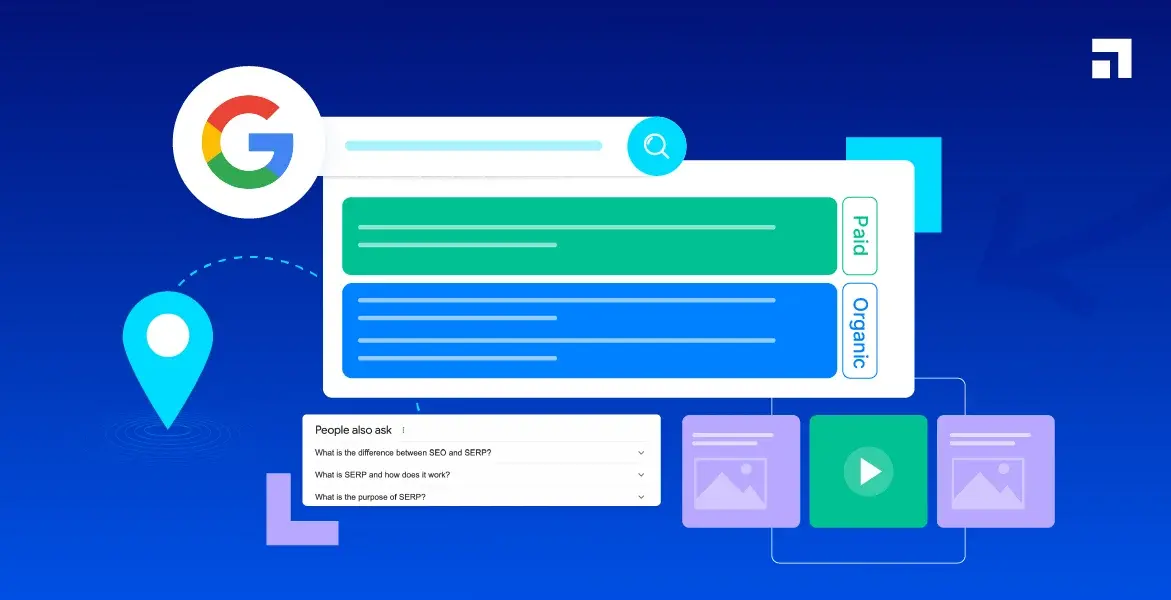
A Google SERP Analyzer is a free tool that shows you the top search results for any keyword. It reads the search engine results page (SERP) and gives you clear data about every website sitting at the top. You see their titles, URLs, ranking positions, and the special features Google shows for that keyword.
Without this tool, you are flying blind. You write content, publish it, and wait. You have no idea why your competitor ranks above you. A Google SERP Analyzer removes that guesswork completely. It shows you the full picture of Google’s first page so you can plan smarter.
How Does a Google SERP Analyzer Actually Work?
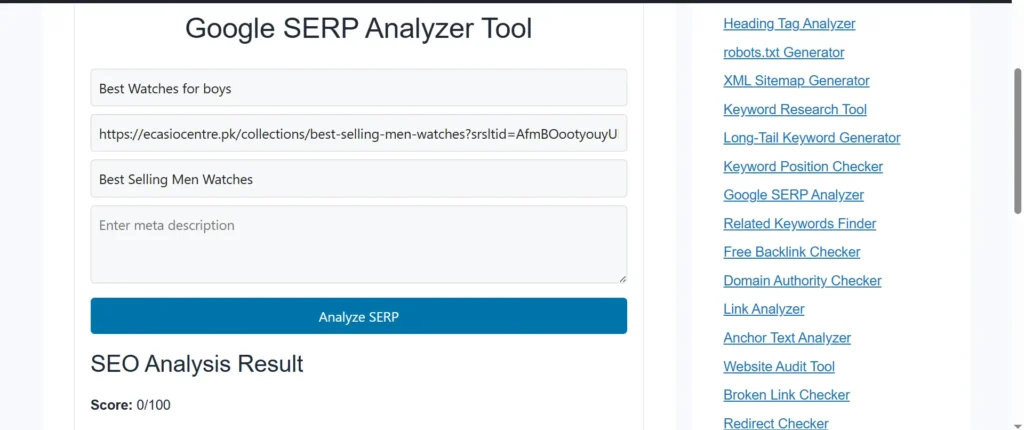
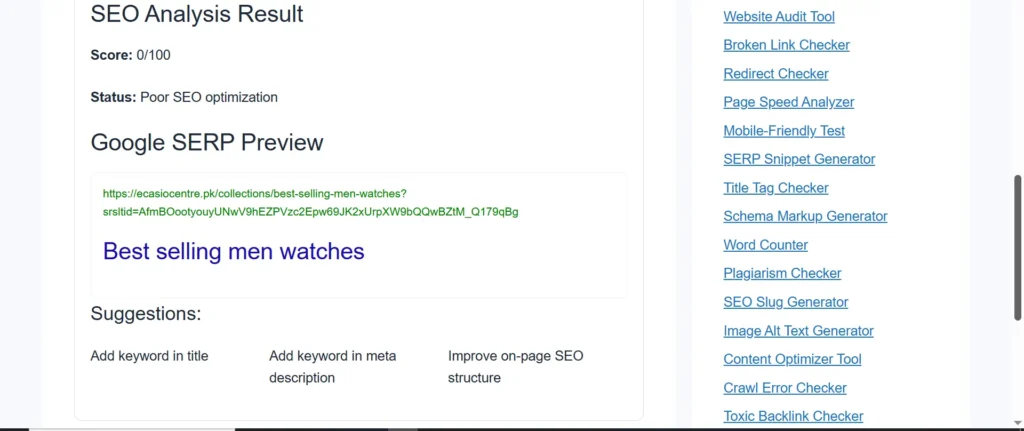
The tool takes your target keyword and sends it to Google. It then collects data from the top results and shows you everything in one clean report. You see each ranking page, its title tag, word count, authority score, backlinks, and the SERP features Google displays for that search.
It works fast. You type in a keyword, hit analyze, and within seconds you get a full breakdown of who ranks and how strong they are. This saves hours of manual research. Instead of clicking each result one by one, the Google SERP Analyzer brings all the data to one screen.
What Kind of Data Does a Google SERP Analyzer Show You?
The tool gives you several important data points. You see the exact rank position of every competing page. You also see the page title and the URL. Beyond that, you get the page authority score, which tells you how trusted that page is in Google’s eyes.
You also see the number of backlinks pointing to each result. Backlinks are links from other websites. More quality backlinks usually mean higher rankings. The tool also shows you how much organic traffic each top-ranking page receives each month. All of this data helps you understand why certain pages sit at the top and what you need to do to compete with them.
Which SERP Features Can a Google SERP Analyzer Detect?
Google search results today show much more than just ten blue links. A good Google SERP Analyzer detects all the special features that appear on the results page. These include featured snippets, which are short answers that appear right at the top of Google. The tool also detects People Also Ask boxes, which are groups of related questions Google shows to help searchers.
Other features include local packs for businesses in a specific area, image packs, video carousels, and AI Overviews. In 2026, AI Overviews now appear in nearly half of all Google searches. Knowing which features appear for your keyword helps you format your content the right way. If Google shows a list-style featured snippet for your keyword, you know to structure your content as a clear, concise list.
Try Other Free SEO Tools:
How Does a Google SERP Analyzer Help You Beat Your Competitors?
The tool gives you competitor intelligence you simply cannot get by reading pages one by one. When you run a Google SERP Analyzer report, you see patterns fast. You notice that every top-ranking page covers a topic you missed. You see that competitors use shorter titles or longer articles. You spot that certain pages earn featured snippets because they answer questions directly.
With this data, you build a content strategy based on real evidence. You know what word count to target, which questions to answer, and what type of content Google rewards for your keyword. Content teams that analyze SERPs before they write see first-page rankings double in as little as six months compared to teams that skip this step.
Why Should You Use a Free Google SERP Analyzer Instead of Doing Manual Research?
Manual research on Google is slow and unreliable. Your personal search results change based on your location, your browser history, and your device. You never see the same results a user in another city or country sees. A Google SERP Analyzer removes all of that personalization and shows you the true, neutral picture of Google’s rankings for any location.
It also saves enormous amounts of time. Manually visiting ten pages, noting their titles, counting their backlinks, and checking their word counts could take two hours or more. The Google SERP Analyzer does all of that in seconds. This gives SEO professionals, content marketers, and small business owners more time to create content instead of collecting data.
What Should You Do After Running a Google SERP Analyzer Report?
After you get your report, the next step is to study what the top pages have in common. Look at the word counts of the first five results. If they all sit between 1,500 and 2,000 words, that tells you the length of content Google expects for that topic. Look at their title tags to see what words and formats they use.
Check which SERP features appear. If you see a People Also Ask box, write your content using question-based headings with clear, short answers directly below each question. If a featured snippet appears, write a short, direct paragraph that answers the main question clearly. Then optimize your on-page SEO, build quality backlinks, and improve your page speed. The Google SERP Analyzer gives you the roadmap. Your job is to follow it.
How Often Should You Use a Google SERP Analyzer to Track Your Progress?
SEO is not a one-time task. Google updates its algorithm constantly, and competitor pages change all the time. A competitor could publish a stronger article tomorrow and take your ranking. Running a Google SERP Analyzer regularly keeps you aware of changes before they hurt your traffic.
Many SEO professionals run SERP checks daily during active campaigns. Others check weekly or monthly to monitor shifts. The right frequency depends on your goals. If you target competitive keywords in a fast-moving industry, more frequent checks help you react quickly. For less competitive topics, a monthly check is usually enough to stay on top of changes.
Can a Google SERP Analyzer Help Small Websites Compete with Big Brands?
Yes, absolutely. Big brands rank for thousands of keywords, but they do not dominate every single one. A Google SERP Analyzer helps you find the weak spots in the search results. Some top-ranking pages have low authority scores. Some come from websites that do not update their content often. These are the gaps where a newer, focused website can step in and outrank them.
When you use the Google SERP Analyzer on tool.thetopfile.com, you find those opportunities fast. You see exactly which competing pages look weak and which keywords have room for a better answer. This is the smartest strategy for small websites that want real growth without a huge budget.
FAQs
What is a Google SERP Analyzer?
A Google SERP Analyzer is a free tool that examines the top search results for any keyword. It collects data on ranking pages, including their titles, backlinks, authority scores, and special SERP features like featured snippets and People Also Ask boxes, so you can understand why those pages rank and what you need to do to compete.
How do I use the Google SERP Analyzer on thetopfile.com?
Go to tool.thetopfile.com/google-serp-analyzer, type your target keyword into the search box, and click the Analyze button. The tool instantly shows you the top-ranking pages for that keyword, along with all the key SEO data you need to build a winning content strategy.
Is the Google SERP Analyzer free to use?
Yes. The Google SERP Analyzer on thetopfile.com is completely free. You do not need to create an account or pay any subscription fee. Simply enter your keyword and get your results instantly.
Why do SERP results look different on my own browser?
Google personalizes search results based on your location, browser history, and past searches. This means what you see in your browser is not what other users see. A Google SERP Analyzer bypasses personalization and shows you neutral, unbiased results so you see the true competitive landscape.
What is a featured snippet and can the SERP Analyzer detect it?
A featured snippet is a short answer Google shows at the very top of the search results, above all other links. It pulls content directly from a webpage that gives the clearest answer to a question. Yes, the Google SERP Analyzer detects featured snippets and other SERP features, so you know exactly what format of content to create to earn that top spot.
What is a People Also Ask box in Google?
The People Also Ask box is a section in Google search results that displays related questions other searchers commonly ask. It appears in about 80% of searches. Answering these questions clearly in your content gives you a strong chance of appearing in that box, which boosts your visibility even if you do not rank number one for the main keyword.
How does a Google SERP Analyzer help with keyword research?
The tool shows you which pages rank for your target keyword and what related keywords they also rank for. This helps you discover new keyword opportunities you may have missed. You also see the search volume and difficulty level of keywords, helping you prioritize the ones most likely to bring traffic to your website.
What is the difference between a SERP Analyzer and a keyword research tool?
A keyword research tool helps you find keywords and estimate their search volume. A Google SERP Analyzer goes deeper it shows you who currently ranks for those keywords and why. It gives you competitive intelligence, including backlinks, content structure, authority scores, and SERP features, which keyword research tools alone do not provide.
Can I use a Google SERP Analyzer for local SEO?
Yes. A Google SERP Analyzer helps with local SEO by showing you the local pack results that appear for location-based searches. You can see which local businesses Google features and what signals they use to rank in those local spots, helping you improve your own local SEO strategy.
How does the Google SERP Analyzer support E-E-A-T optimization?
E-E-A-T stands for Experience, Expertise, Authoritativeness, and Trustworthiness the four quality signals Google values most. A Google SERP Analyzer helps you study top-ranking pages that already meet these standards. By understanding their content depth, author credibility signals, and backlink profiles, you can model your own content to meet Google’s quality expectations and rank higher.