

Long-Tail Keyword Generator
What Is a Long-Tail Keyword Generator and Why Do You Need It?
A long-tail keyword generator is a tool that takes one simple keyword and turns it into many longer, more specific search phrases. It uses advanced algorithms to generate multiple keyword variations that are more specific, less competitive, and often have higher conversion rates than short keywords.
Think about it this way. Someone types “shoes” into Google. That search is too broad. But when someone types “best running shoes for flat feet women under $100” that person knows exactly what they want. Long-tail keywords usually have lower search volume but higher intent and less competition, making them easier to rank for.
That is the power of long-tail keywords. And this tool finds them for you in seconds.
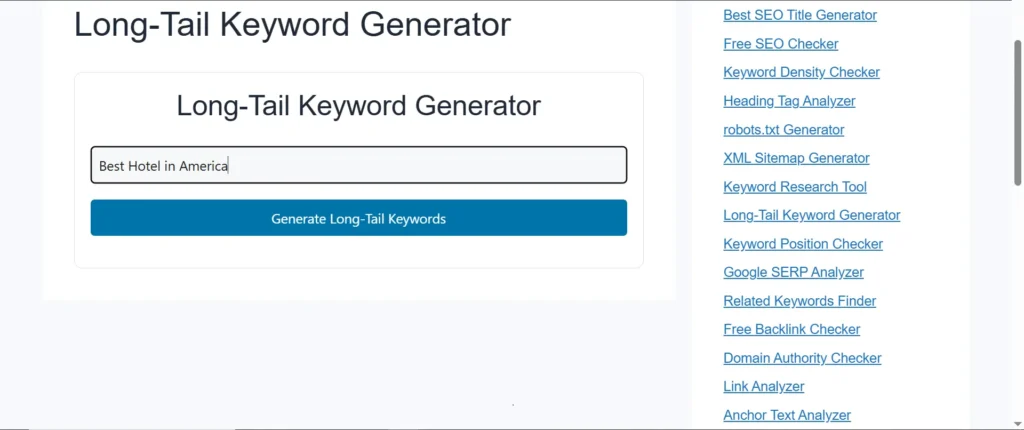
How Does a Long-Tail Keyword Generator Actually Work?
The process is simple. You enter a seed keyword one main topic or phrase. The tool places your search term into Google’s search box along with different letters and numbers and then collects the generated suggestions, which can result in a list of over 750 long-tail search phrases.
The tool taps into an extensive database, reviewing a wealth of information to uncover long-tail keywords that are highly relevant to your niche. It provides both search volume and ranking difficulty.
You get a ready-to-use list of keyword ideas. You pick the ones that match your content goals. Then you start writing content that actually ranks.
Why Do Long-Tail Keywords Perform Better Than Short Keywords?
Short keywords look powerful. They have millions of searches every month. But they also have millions of competitors. New websites and small blogs cannot beat Wikipedia, Amazon, or Forbes for those keywords. Long-tail keywords together make up a whopping 91.8% of all Google searches. That is a massive opportunity most people ignore.
Long-tail keywords attract users with specific intent, resulting in conversion rates 2 to 3 times higher than generic keywords. Users know exactly what they want, and less competition means faster ranking times and lower costs. So when you use the Long-Tail Keyword Generator on this page, you are not just finding keywords. You are finding buyers, readers, and loyal visitors.
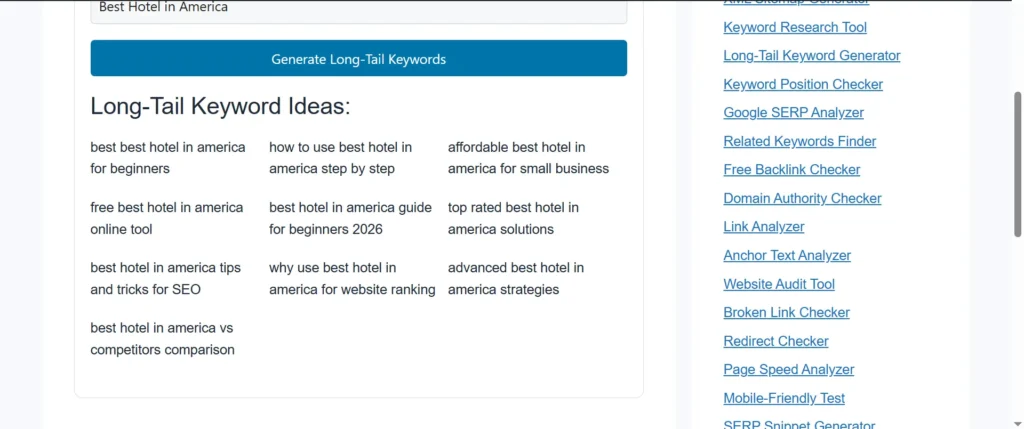
Who Should Use This Long-Tail Keyword Generator Tool?
Anyone who wants more traffic from Google should use this tool. It works perfectly for bloggers who want to grow their audience without spending money on ads. It works for small business owners who want to appear in local search results. It works for ecommerce sellers who want to rank for product-specific searches.
For multi-channel sellers on Amazon, eBay, or Etsy, long-tail keyword tools pull autocomplete suggestions directly from each marketplace. This makes it easy to capture platform-specific searches and apply them consistently in product listings, ads, and your main website.
SEO professionals use it to build content clusters fast. Content writers use it to find new article angles. Even beginners can use it because you only need one keyword to get started.
Try Other Free SEO Tools:
What Makes a Good Long-Tail Keyword?
Not every long keyword is a good long-tail keyword. A strong long-tail keyword has a few key qualities. A good long-tail keyword should be 3 to 5 words long, be specific and descriptive, target user intent, have lower competition than short keywords, and be relevant to your content. It should also match what your reader actually wants.
If it is a “best” keyword, it may have a listicle intent. If the keyword contains the word “buy,” it is probably a transactional intent looking for an ecommerce website. Knowing this helps you create the right type of content for each keyword. The Long-Tail Keyword Generator makes this easy. It groups keywords by intent so you always know what type of content to write.
How Do You Use Long-Tail Keywords in Your Content the Right Way?
Finding keywords is only the first step. You also need to use them the right way. You should include the keywords in the title and meta descriptions of your articles. You should also consider including the relevant keywords and their synonyms in the main body of your page, headlines, and image alt tags.
Do not stuff keywords into every sentence. That hurts your rankings. Do not worry about keyword density. Instead, use keywords only when it makes sense for the people who read your text. Write naturally. Sound helpful. Put your reader first, and Google will reward you.
Can You Use Long-Tail Keywords for Google Ads and PPC Campaigns?
Yes, absolutely. Long-tail keywords work very well in paid advertising too. Long-tail keywords are excellent for PPC because they are less competitive, which means a lower cost-per-click. They are more targeted, which means higher quality scores. And they better match user intent, which leads to improved ROI.
If your niche is competitive and the cost-per-click is high, you can create laser-focused ads that target specific long-tail keywords. This tactic results in a higher click-through rate and quality score for your ads.
This means your ad budget goes further. You reach the right people. You pay less per click. And you get more conversions.
How Many Long-Tail Keywords Should You Target Per Page?
This is one of the most common questions beginners ask. The answer is simple. It is best to focus on one primary long-tail keyword per page, with 2 to 3 related long-tail keywords naturally integrated throughout the content.
Focus on 1 to 2 primary long-tail keywords per page, with 3 to 5 related variations naturally integrated throughout your content. Quality and relevance matter more than quantity.
Do not try to rank for 20 keywords on one page. Write one great page for one main keyword. Then create more pages for other keywords. This strategy builds a strong content foundation over time.
What Is the Difference Between Informational and Commercial Long-Tail Keywords?
Not all long-tail keywords serve the same purpose. Some people want information. Some people want to buy. You need to understand this difference before you write any content.
Informational long-tail keywords, such as “how to improve email open rates,” indicate users seeking information. Commercial long-tail keywords, such as “best email marketing software for startups,” indicate users ready to purchase. Both are valuable for different stages of the customer journey.
The Long-Tail Keyword Generator helps you see keyword intent clearly. You can plan your content for both types of readers and guide them through their journey on your website.
How Does This Free Long-Tail Keyword Generator Save You Time?
Manual keyword research is slow. You open Google, type a keyword, write down suggestions, check another keyword, and repeat. This process takes hours. Instead of manually brainstorming ideas or guessing what your audience is searching for, the tool quickly generates hundreds of relevant keyword suggestions based on seed terms, competitors, or search trends, giving you a ready-to-use list for your SEO strategy.
The Free Long-Tail Keyword Generator is significantly faster than manual research. It generates long-tail keywords in seconds, while manual methods can take hours. You get more done. You save energy. And you spend your time writing content instead of hunting for keywords.
FAQs
What is a long-tail keyword generator?
A long-tail keyword generator is a free online tool that takes your main keyword and creates a list of longer, more specific search phrases that real people type into Google. It helps you find low-competition keywords that are easier to rank for.
Are long-tail keywords better than short keywords?
Yes, for most websites and blogs. Long-tail keywords have less competition, higher conversion rates, and they match what users are actually searching for. They bring more targeted traffic to your site.
How do I use a long-tail keyword generator?
You type one seed keyword into the tool. The generator creates a list of longer keyword phrases based on that keyword. You then pick the best ones and use them in your blog posts, product pages, or ad campaigns.
Is a long-tail keyword generator free to use?
Yes. The Long-Tail Keyword Generator on tool.TheTopFile is completely free. You do not need to create an account or pay anything. Just enter your keyword and get instant results.
How many words should a long-tail keyword have?
A long-tail keyword usually has 3 to 5 words. For example, “best keyword research tool for beginners” is a good long-tail keyword. It is specific, clear, and targets a defined audience.
Can long-tail keywords help my website rank on Google?
Yes. Long-tail keywords face less competition on Google. This means your content has a better chance of ranking on the first page, especially if you are running a new or small website.
What is the difference between a long-tail keyword and a short-tail keyword?
A short-tail keyword is one or two words, like “shoes” or “SEO.” A long-tail keyword is three or more words, like “best SEO tools for small businesses.” Long-tail keywords are more specific and easier to rank for.
Can I use long-tail keywords in Google Ads?
Yes. Long-tail keywords work very well in Google Ads because they cost less per click and attract more qualified buyers. They also improve your quality score and lower your overall ad spend.
How often should I refresh my long-tail keyword list?
You should update your keyword list regularly especially during seasonal trends, product launches, or when search behavior changes. Using a long-tail keyword generator regularly keeps your content strategy fresh and relevant.
Do long-tail keywords work for local SEO?
Absolutely. Long-tail keywords are great for local SEO. Phrases like “affordable plumber in Austin Texas” or “best pizza near downtown Chicago” help local businesses appear in very targeted searches and attract nearby customers.